

How Are Dates Prepared for Long-Distance Transportation? From Packaging to Cargo Condition Control
Summary: Preparing dates for long-distance transportation requires more than simply placing the fruit into cartons. Proper sorting, quality inspection, suitable food-grade packaging, moisture management, temperature control and careful cargo handling all play an important role in maintaining date quality during export and international distribution.
Dates are naturally sensitive to changes in moisture, temperature, handling conditions and storage environment. During a long international journey, the product may spend days or weeks in warehouses, trucks, containers and ports. For this reason, professional date exporters prepare the cargo according to the variety, maturity stage, moisture condition, packaging format and expected transportation route.
Why Proper Preparation Matters for Long-Distance Date Shipping
The objective of export preparation is to ensure that the dates arrive at the destination in a condition that remains consistent with the agreed specifications. Poor handling can lead to crushing, surface damage, moisture changes, packaging failure, condensation or quality deterioration.
- Protecting dates against mechanical damage during handling
- Reducing unwanted moisture exchange with the surrounding environment
- Maintaining suitable temperature and humidity conditions
- Protecting the cargo from contamination and foreign odors
- Maintaining consistent quality throughout the supply chain
Step 1: Sorting and Quality Inspection Before Packaging
Before packaging, dates should be inspected and sorted according to the agreed commercial specifications. Depending on the variety and market, inspection may include size, color, texture, cleanliness, visible defects, insect damage, fermentation signs and overall uniformity. Removing unsuitable fruit before loading helps improve the consistency of the final shipment.
Step 2: Choosing the Right Packaging for Export
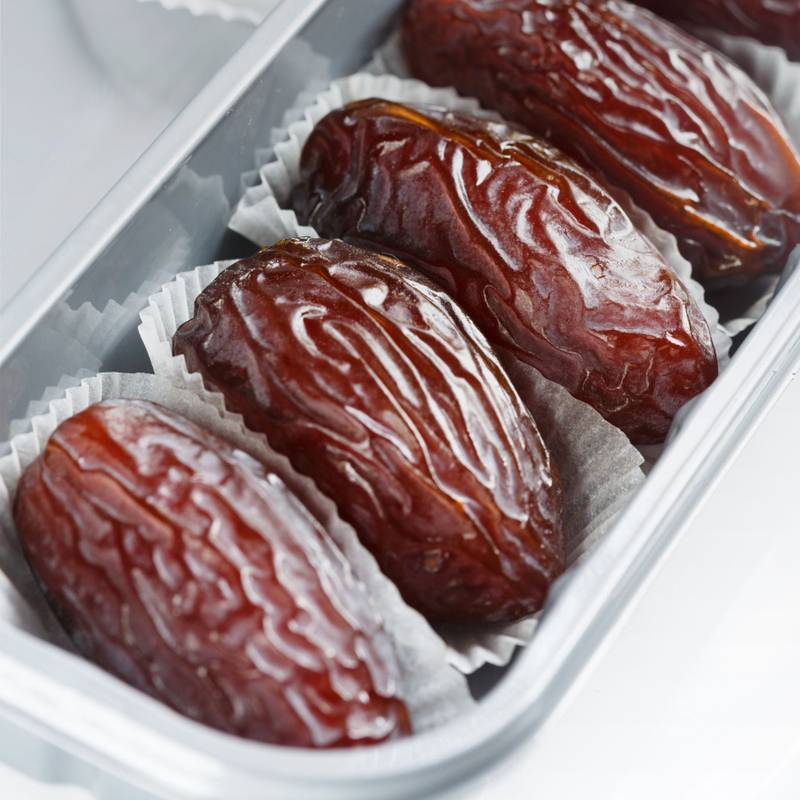
Packaging is one of the most important parts of preparing dates for long-distance transportation. The packaging format should be selected according to the date variety, moisture level, destination market, transportation duration and whether the product is intended for bulk processing, wholesale distribution or retail packaging.
For fresh dates, the Codex standard adopted in 2025 specifies that packaging should properly protect the produce. Packaging materials in contact with the product should be food-grade, clean and suitable for preventing external or internal damage. Containers should also meet appropriate requirements for quality, hygiene, ventilation and resistance during handling and shipping. [oai_citation:1‡FAOHome](https://www.fao.org/fao-who-codexalimentarius/sh-proxy/es/?lnk=1&url=https%253A%252F%252Fworkspace.fao.org%252Fsites%252Fcodex%252FStandards%252FCXS%2B363-2025%252FCXS_363e.pdf&utm_source=chatgpt.com)
What Should Export Date Packaging Provide?
- ✔️ Protection against crushing and mechanical damage
- ✔️ Food-grade materials suitable for contact with dates
- ✔️ Appropriate protection against unwanted moisture exchange
- ✔️ Sufficient strength for stacking and transportation
- ✔️ Clean packaging without foreign matter or unwanted odors
- ✔️ Packaging specifications compatible with the destination market
Step 3: Controlling Moisture Before Shipment
Moisture management is particularly important for dates because the fruit can exchange moisture with its surrounding environment. According to postharvest guidance from UC Davis, dates stored at relative humidities above the recommended range can absorb moisture from the surrounding air unless they are protected by moisture-proof packaging. Excess moisture can also increase the risk of microbial deterioration. [oai_citation:2‡UC Postharvest Center](https://postharvest.ucdavis.edu/ar/produce-facts-sheets/date?utm_source=chatgpt.com)
For this reason, exporters should verify the condition of the product before loading rather than relying only on the appearance of the outer packaging. Moisture condition, texture and product stability should be consistent with the agreed specification for the particular date variety.
Step 4: Temperature and Humidity Control
Temperature requirements vary according to the cultivar and product condition. UC Davis postharvest guidance lists approximately 0°C (32°F) for long-term storage of many dates, while noting that semi-soft and soft cultivars differ in storage life. It also recommends a relative humidity range around 70–75% for dates under the cited storage conditions. [oai_citation:3‡UC Postharvest Center](https://postharvest.ucdavis.edu/produce-facts-sheets/date?utm_source=chatgpt.com)
Preventing Temperature Fluctuations During Transportation
Maintaining a stable transportation environment is important because repeated temperature changes can contribute to condensation. Condensation increases the availability of moisture on the product surface and can create conditions that encourage deterioration. UC Davis specifically recommends avoiding temperature fluctuations during date handling and storage. [oai_citation:4‡UC Postharvest Center](https://postharvest.ucdavis.edu/ar/produce-facts-sheets/date?utm_source=chatgpt.com)
The Cold Chain Should Be Planned, Not Assumed
For temperature-sensitive shipments, exporters and importers should define the required storage and transportation conditions before loading. The appropriate temperature is not identical for every date variety, so the shipping plan should be based on the specific product, packaging, expected transit time and destination requirements.
Preparing Cartons, Pallets and Export Cargo
Once the dates have been packed, the outer cartons and pallets become the second level of protection. Cartons should be strong enough for the expected stacking conditions, while palletization should reduce movement and prevent excessive pressure on individual packages.
- Use clean and structurally suitable export cartons
- Avoid excessive compression when stacking packages
- Secure pallets to minimize movement during transit
- Protect cargo from direct exposure to water and contamination
- Keep shipment identification and lot information clear and traceable
Sea Freight, Land Transport and Long Transit Times
The transportation method affects the way a date shipment should be prepared. Sea freight may involve extended transit and multiple handling stages, while road transportation may expose the cargo to substantial temperature variation. In both cases, the packaging and storage plan should be designed around the expected journey rather than treating all shipments identically.
For fresh dates in particular, Codex requires packaging to follow the relevant code of practice for packaging and transport of fresh fruits and vegetables, including provisions applicable to refrigerated transport. [oai_citation:5‡FAOHome](https://www.fao.org/fao-who-codexalimentarius/sh-proxy/es/?lnk=1&url=https%253A%252F%252Fworkspace.fao.org%252Fsites%252Fcodex%252FMeetings%252FCX-701-48%252FFINAL%252520REPORT%252FREP25_CACe.pdf&utm_source=chatgpt.com)
Final Cargo Inspection Before Loading
- ✔️ Product variety and grade match the purchase specification
- ✔️ Dates show no unacceptable signs of decay or fermentation
- ✔️ Packaging is clean, intact and correctly sealed where applicable
- ✔️ Cartons and pallets are stable and suitable for handling
- ✔️ Required storage and transportation conditions are defined
- ✔️ Lot and shipment identification is properly documented
What Bulk Buyers Should Check Before Shipment
For importers and wholesale buyers, transportation preparation should be discussed before the cargo leaves the origin. The buyer and supplier should agree on the date variety, grade, size, packaging format, product condition, shipping method and required storage conditions. This reduces uncertainty and helps ensure that the delivered cargo matches the commercial specification.
Important Points for International Date Buyers
- ✔️ Confirm the exact date variety and quality grade
- ✔️ Agree on packaging specifications before production
- ✔️ Confirm moisture and texture requirements
- ✔️ Define suitable temperature and humidity conditions
- ✔️ Select transportation according to distance and transit time
- ✔️ Inspect cargo condition before loading
- ✔️ Maintain clear lot and shipment documentation
How Professional Date Exporters Protect Product Quality
Professional date export is not limited to selecting good fruit. It is a complete postharvest process that connects sorting, quality control, packaging, storage, palletization and transportation. Every stage can influence the final condition of the product when it reaches the importer.
This is particularly important for international wholesale trade, where a shipment may travel through several logistics stages before reaching its final warehouse. A well-designed packaging and cargo-control system helps protect the product from physical damage and environmental changes throughout this journey.
Conclusion: Long-Distance Date Transportation Starts Before Loading
Successful long-distance transportation of dates begins well before the cargo is loaded onto a truck or vessel. Proper sorting, suitable food-grade packaging, moisture management, temperature control, stable palletization and careful cargo inspection all contribute to maintaining product quality. For bulk importers and international buyers, selecting an experienced supplier with a clear export and postharvest handling process can make the logistics stage more predictable and reliable.
*This content is provided for product education, international wholesale communication and SEO optimization. Storage and transportation conditions should be adjusted according to the specific date variety, product condition, packaging and destination requirements.